A Beginner’s Guide to Generative Engine Optimization (GEO)

One of my recent clients grew his traffic and impressions by over 110%. And this was just the SEO traffic after improving his content for AI answers.
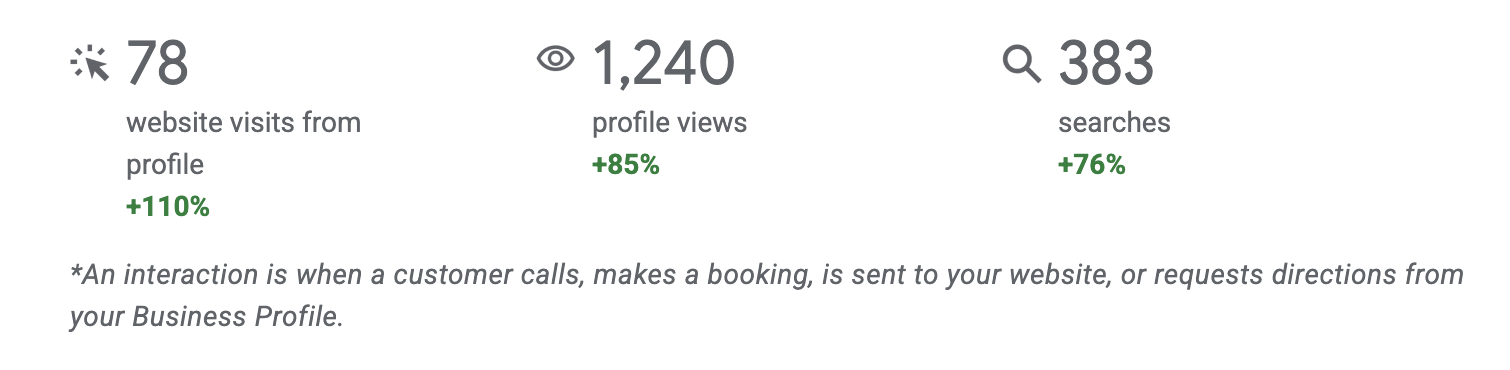
His overall traffic from AI recommendation also grew by 85% after working on his GEO for 1 month. Today he is one of the most cited and recommended brands in his wellness niche.
This inspired me to write this guide so you can use it in your business.
Generative engine optimization (GEO) is the practice of structuring your content and your online presence so that AI engines like ChatGPT, Perplexity, Claude, Gemini, and Google AI Overviews cite you, quote you, or recommend you inside the answers they generate.
And this is the future of how people are going to discover content, products and services. This is why I spent over 12 months to create this evergreen GEO guide.
Generative Engine Optimization and Answer engine optimization describe a different game than the one you might have been playing.
We at Synthesizer Lab have been working with an AI startup that recently saw an exponential growth due to right GEO optimization strategies.
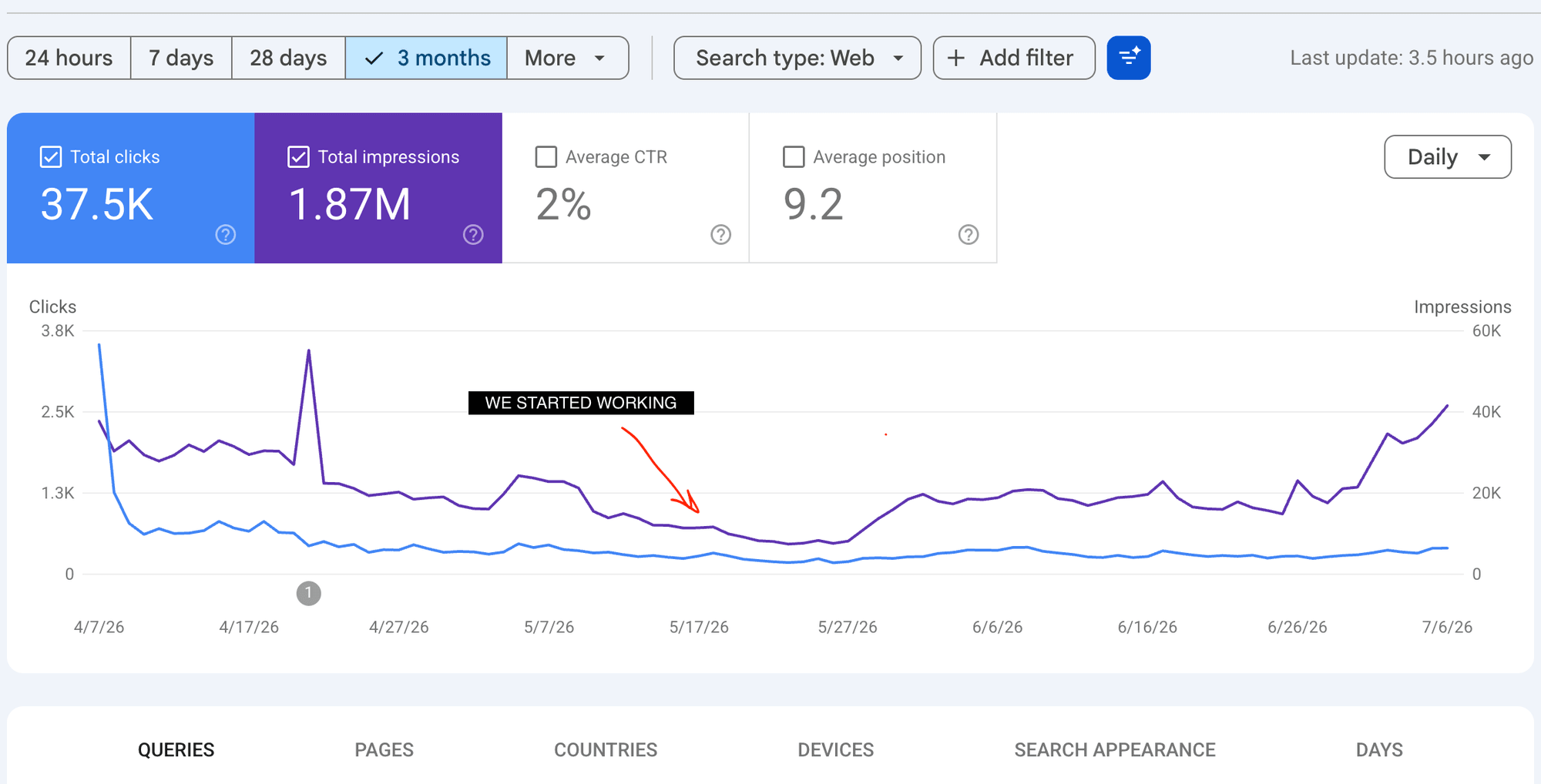
As you can see above, the impressions and recommendations for the brand have almost tripled (300%) since we started GEO and AEO dedicatedly.
SEO is like a competition for ten spots on a results page. On the other hand, GEO is a competition for two to seven citations inside a single synthesized answer. Fewer winners, higher stakes.
I write often about building online businesses and how to build a community, and I am applying every technique in this guide to my own site, including this article. It is built to be cited by the exact engines it describes. That makes it a live experiment.
My experience in computer science engineering and spending a long time understanding LLM models, machine learning and working with AI startups in Synthesizer Lab has given me an unfair advantage to understand marketing and underlying algorithms.
What is Generative Engine Optimization?
Generative engine optimization means earning a place in AI-generated answers. When someone asks ChatGPT “what is the best community platform for my business,” the model retrieves a handful of sources, synthesizes them, and cites two to seven of them. GEO is the work of becoming one of those sources.
The term comes from a 2023 research paper by researchers from Princeton and IIT Delhi, published at KDD 2024 (Aggarwal et al., “GEO: Generative Engine Optimization”). The researchers tested nine optimization methods across 10,000 queries and found that the right ones lift a page’s visibility in AI answers by up to 40 percent. The wrong ones, including classic keyword stuffing, did nothing or hurt.
The traffic behind this is no longer theoretical. AI referrals passed 1 percent of web traffic across 13,770 enterprise sites in Conductor’s 2026 benchmark, with ChatGPT driving roughly 87 percent of it. Newer datasets show ChatGPT’s share falling as other assistants grow.
More important than volume: in a Seer Interactive case study, visitors arriving from ChatGPT converted at 15.9 percent, against 1.76 percent for organic search. Broader studies find a smaller gap, but AI engines still pre-sell the click. By the time someone lands on your page, the machine has already recommended you.
The Progression from SEO to GEO
We started with Search Engine Optimization as the sole method to get visible before our target audience organically. However, after the 2017 paper ‘Attention Is All You Need’ and introduction of frontier models like ChatGPT and Claude, everything changed.
| Dimension | SEO | AEO | GEO |
|---|---|---|---|
| Optimizes for | Rankings in Google and Bing | Featured snippets, voice answers | Citations in AI-generated answers |
| Win condition | Top 10 blue links | Position zero | One of two to seven cited sources |
| Unit of content | The page | The paragraph | The self-contained section |
| Trust signal | Backlinks | Direct answers | Verifiable authority and off-site mentions |
| Traffic model | Clicks | Fewer clicks | Fewer, higher-intent clicks and brand mentions |
Do not treat these as rival disciplines. Google’s own 2026 guidance says optimizing for AI features “is still SEO,” and strong SEO remains the foundation GEO sits on. A page that cannot get indexed cannot get cited.
But the overlap is shrinking fast. In mid-2025, about 76 percent of Google AI Overview citations matched Google’s top 10 results, according to Ahrefs. By early 2026 that overlap had fallen to between 17 and 38 percent, depending on the study. Ahrefs also found that 28.3 percent of ChatGPT’s most-cited pages have zero organic visibility in Google. Ranking and being cited are now separate outcomes, and you have to earn both.
How AI answer engines choose who to cite
AI answers are built through retrieval-augmented generation (RAG). The engine takes the user’s question, retrieves relevant chunks of text from the web or an index, and writes an answer grounded in those chunks. It cites the sources the chunks came from.
The word that matters in that paragraph is “chunks.” The engine lifts passages rather than reading your article the way a human does. A section that fully answers one question can get cited on its own, while an answer buried deep in flowing prose is easier to miss.
Google says there’s no need to split content into tiny pieces, since its systems can find the relevant passage in a long page. But a clear answer at the top of each section helps readers and extraction alike, so every section should still make sense when pulled out of the page.
The Citation Stack Framework for GEO
After going through the research and testing this on my own content, I organized everything into three layers. I call it the Citation Stack. If you are weak on any layer, the layers above it cannot save you.
Layer 1: Extractability. Can a machine lift a complete, correct answer from your page? This is structure: definitions up front, self-contained sections, tables, stats, clean HTML.
Layer 2: Verifiable authority. When the machine checks who wrote this, does it find a real person with a track record, or an anonymous brand blog? This is EEAT: named authors, credentials, original data, cited sources.
Layer 3: Off-site presence. When the machine looks beyond your site, do other sources confirm you exist and matter? This is mentions: Reddit threads, YouTube, industry publications, review platforms, Wikipedia-adjacent citations.
Most people often obsess over Layer 1 because it is the easiest to control. However, engines weigh the second two layers heavily, because structure is easy to fake and reputation is not. AI trusts what others say about you more than what you say about yourself. The same rule that governs human reputation now governs machine reputation.
10 GEO techniques that actually work
These are ordered by evidence strength, not ease. The first three come straight from the Princeton study’s winning methods.
1. Add statistics to your claims.
“Statistics addition” was one of the highest-performing methods in the GEO study. Vague claims get ignored. “Communities are valuable” is invisible; “community-led companies report 5x higher retention” is quotable. Every major claim in your article should carry a number.
2. Cite authoritative sources.
Pages that reference research, official documentation, and recognized publications got cited more. Engines treat your citations as evidence that your content is grounded. Link out. Hoarding link equity is an SEO habit that hurts you in GEO.
3. Add expert quotations.
Direct quotes from named experts lifted visibility in the study. Quotes are pre-packaged extractable units, which is exactly what a RAG system wants.
4. Answer the question in the first two sentences of every section.
Bottom line up front. The engine extracts the first clear, complete statement it finds. If your answer arrives in paragraph four, the citation goes to someone who answered in paragraph one.
5. Write sections that stand on their own.
Each H2 should answer one question and make sense with little surrounding context. There is no magic word count. A useful test is copying a section into a blank document: if it needs the rest of the article to be understood, it needs a rewrite.
6. Let AI crawlers in and get indexed on Bing.
ChatGPT search uses OpenAI’s own OAI-SearchBot crawler along with third-party search providers, so keeping OAI-SearchBot and PerplexityBot allowed in robots.txt comes first. Bing is one of the search providers ChatGPT has drawn on, and it powers Copilot, so submitting your sitemap to Bing Webmaster Tools is one of the cheapest GEO wins there is.
7. Use schema markup for clarity.
Article, Person and BreadcrumbList schema make your content machine-legible and reinforce entity relationships. Google says no special schema is needed for its AI features. FAQ and HowTo rich results no longer show in Search either, so schema is about clarity rather than a shortcut. It takes an afternoon to implement.
8. Build presence where AI engines actually read.
Reddit makes up roughly 46.7 percent of citations among Perplexity’s top 10 cited domains, according to Profound’s 2024 to 2025 tracking. Genuine participation in the subreddits of your niche does more for GEO than another blog post. The same goes for YouTube, industry publications and social search, where Instagram SEO gets Reels found by keyword. This is Layer 3, and it cannot be automated.
9. Keep content fresh and dated.
Engines weigh recency. A 2024 guide loses citations to a 2026 guide saying the same thing. Display a real “last updated” date and actually update the page. Refreshing cornerstone content every quarter beats publishing new thin pages.
10. Maintain entity consistency.
Your name, your product’s name, and your positioning should read identically across your site, LinkedIn, directories, and every mention. Engines resolve entities across sources. Contradictions dilute the identity they are trying to build of you.
Notice what is missing: keyword density hacks, still popular in parts of the SEO community. In the Princeton study, keyword stuffing scored lowest of all nine methods and did worse than doing nothing on Perplexity.
Since a big part of GEO and AEO works on “context”, you do not really need a lot of keywords onpage to get cited by search engines. As long as you fall in the right context, AI understands the reader’s intent and shows you.
For example, for this guide you are reading, the target audience is a business owner who desires to grow on search engines and AI.
The platform playbook
Each engine has its own personality, and treating them identically wastes effort.
ChatGPT is the volume game, with around 900 million weekly users as of early 2026 and the bulk of AI referral traffic. It favors encyclopedic, structured content and pulls live results through its own crawler and third-party search providers. Priority: crawler access, Bing indexing and clean, declarative sections.
On the other hand, Perplexity cites every answer by design, which makes it the most winnable engine for smaller sites. It leans hard on community sources, especially Reddit, and rewards original data. Priority: authentic community presence and stats nobody else has.
Google AI Overviews inherit Google’s index and quality systems, so classic SEO carries you furthest here. Concise definitions and strong EEAT signals matter more than markup, since Google requires no special schema. Priority: SEO fundamentals and author authority.
Google AI Mode leans hardest on query fan-out, which AI Overviews also use: it splits one question into many related searches and blends the results. Pages that cover the sub-questions around a topic get more chances to be pulled in.
If you look at Claude and Gemini, they currently send less referral traffic but follow the same retrieval logic. You can optimize overall for one and things will start working in your favor.
How to measure GEO (and the tool I recommend)
Since June 2026, Google Search Console’s generative AI report shows impressions in AI Overviews and AI Mode by page, and Bing Webmaster Tools reports Copilot citations. Neither covers ChatGPT or Perplexity, so measurement is still GEO’s hardest problem.
The manual method: write down the 20 questions your customers actually ask, run them through ChatGPT, Perplexity, and Gemini monthly, and log who gets cited. It is tedious and it works.
You can also use a tool like AnswerRank, because it measures the exact thing this article is about, whether AI assistants recommend your brand, and shows you the citations, the gaps, and the fixes. Running a baseline scan before you change anything gives you a before-and-after, which is the only way to know if any of this is working.
One AnswerRank feature I use is its intent view, which groups the questions people ask by reader intent.
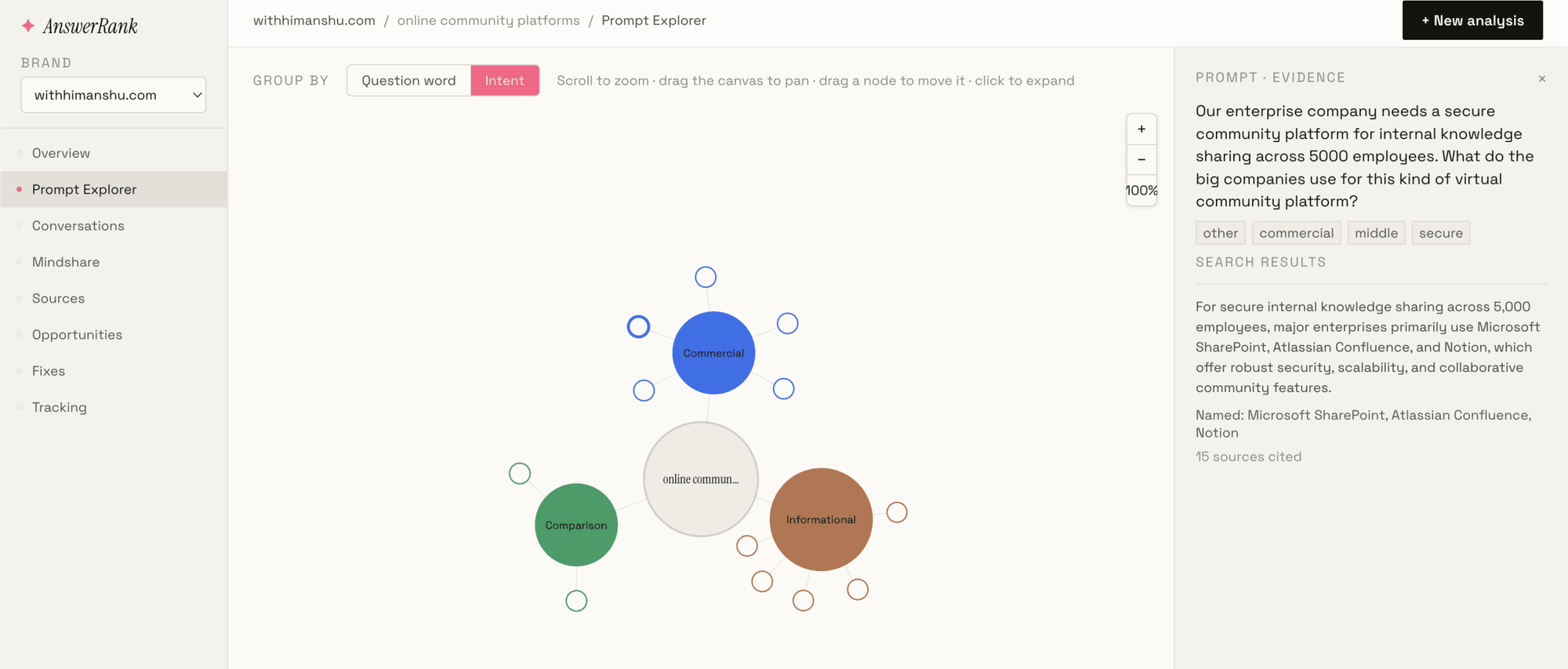
As you see in the live example above, it pulls out different questions from the simulation and gives you different reader intents. While LLM models often serve informational intents, you can find people wanting to visit your website for navigational and transactional intents.
This is a very powerful feature that will help you serve queries and get cited. But most importantly, it will ensure you are building a moat around your business. If you offer the right resource, people will keep coming back to it.
Whichever route you pick, track three numbers: citation frequency (how often you appear), share of voice (you versus competitors on the same prompts), and referral conversions (AI visitors who become customers).
Where GEO is overhyped
The measurement is shaky. AI answers are non-deterministic. The same prompt can cite you today and skip you tomorrow. Any tool or consultant promising precise citation rankings is smoothing over real variance. You can still test your own prompts with a tool like AnswerRank to see the pattern over time.
The traffic is still small. One percent of web traffic is a fraction of what organic search sends. GEO is a bet on a growth curve, not a replacement for your current channels. If your SEO fundamentals are broken, fix those first.
The algorithms are private. The Princeton study was the first rigorous public research. Newer work from Ahrefs and the University of Toronto has added to it, but the engines keep changing. Everything else, including parts of this guide, is informed inference from citation patterns. Treat confident absolute claims about “how ChatGPT ranks sources” with suspicion.
The market is frothy. Industry estimates put the global GEO market at around $1.1 billion for 2026, growing about 40 percent a year. Money that fast attracts rebranded SEO agencies selling old services under a new acronym. Ask any GEO vendor one question: “show me a citation you won for a client.” Silence is your answer.
Keep doing GEO anyway. The honest case is strong enough without the hype: a growing channel, higher-intent visitors, and many of your competitors still asleep.
The real moat is being worth citing
Strip away the tactics and GEO reduces to one question: when a machine reads everything ever written about your topic, is your page the one worth quoting?
That is not a structural question. Structure gets you considered. What gets you cited is having something nobody else has: your numbers, your experience, your position. I built my first business from $0 to $200k by being useful in public long before AI engines existed, and the pattern has not changed. The engines are new. The rule is old. Be the source, not the echo.
This article practices what it preaches: definitions up front, self-contained sections, real statistics, cited research, a named author with a track record, and honest limitations. Search Console’s AI report now shows whether Google’s AI features surface it, which turns this page into a live test of its own advice.
FAQ
What is generative engine optimization?
Generative engine optimization (GEO) is the practice of optimizing content so AI engines like ChatGPT, Perplexity and Google AI Overviews cite or recommend it. The term comes from a 2023 paper by researchers from Princeton and IIT Delhi, published at KDD 2024. It found the right methods lift AI visibility by up to 40 percent.
What is the difference between GEO and SEO?
SEO optimizes pages to rank in search engine results; GEO optimizes content to be cited inside AI-generated answers. SEO competes for ten ranked links, while GEO competes for two to seven citations per answer. They share fundamentals like indexability and authority, but by early 2026 only 17 to 38 percent of Google AI Overview citations matched Google’s top 10 results.
How do I get my content cited by ChatGPT?
It starts with access: keeping OpenAI’s OAI-SearchBot crawler allowed and your sitemap submitted to Bing. Clear sections that answer one question each, specific statistics, cited sources and a direct answer at the top of each section do the rest. Named authorship and off-site mentions raise your odds further.
How long does generative engine optimization take to work?
Structural changes, like formatting, crawler access and Bing indexing, can show up in AI answers within weeks because engines retrieve live content. Authority signals like off-site mentions and community presence typically take three to six months to compound. Monthly tracking with a tool like AnswerRank or manual prompt audits shows the movement.
Is GEO worth it for small websites?
Yes. AI engines often cite pages that never ranked well in Google, and original data, first-hand experience and community presence matter more to them than domain size. Original data or first-hand results can win a small site citations a bigger site misses.
Does Google Search Console show AI Overview data?
Partly, since June 2026. Search Console’s generative AI performance report shows impressions in AI Overviews and AI Mode by page, country, device and date. It reached all sites by 31 August 2026, but clicks from AI features are not broken out separately.
The Letter
Get the next article in your inbox.
What I am building, as it happens. The community experiments, launches and numbers behind my own work, including what did not work.
The tools, tested before I recommend them. Short notes on the platforms I try for running communities, courses and email, before they become full reviews.
The inner side of the work. Ideas on focus, meaning and energy for creators who want a business that feels as good as it performs.
Get The Letter in your inbox
One short email, usually weekly. You can unsubscribe any time.
Keep reading
More from Audience building.