How to Grow Your Community to the First 1,000 Members

Growing your community can be a massive advantage in business. That can mean more clients for your business or even high revenue from your existing customers. Once you build an engaging community, it becomes possible to get out of the overwhelming world of social media and work closely with the people who genuinely care for the results.
If you don’t nurture your community, your business could stall or even shrink. When customers have tens of options online, without a community it is very hard to build that close relationship that can go for ages. But growth from zero rarely comes from one big launch. It comes from a steady stream of the right people, one stage at a time.
Affiliate disclosure: Some links on this page are affiliate links. If you buy through them, I may earn a commission at no extra cost to you. I will appreciate if you use them.
Why Community Building is Important
Communities are key to business success today. They’re where new ideas are born, customers chat, brands grow, and most importantly, where long-term relationships form.
A community that’s actively engaged is like a brand champion, giving you helpful feedback and boosting your visibility in a busy market.
What happens if you ignore community building? It’s simple: your business might fade into the background, losing its unique voice that attracts clients.
If community members feel like they’re just another number, they’ll look for better connections elsewhere. So, growing an online community is vital. It can make a big difference in your business success.
Getting Your Community Started
To create a successful community that helps you get more business, you need to create a unique culture, set rules for interaction, and promote friendly engagement.
When you build a community, clear behavior rules from the beginning guide how members interact and behave.
Choose the Right Platform
Every community needs a home where members can connect, learn, and grow together. The choice of platform is a fundamental decision that affects the success of your community-building efforts.
Some good options are Facebook group, Telegram, Discord or Slack. However, the problem with most of these platforms is, they are not designed for business communities. In most of the cases they are simple chatrooms and not the engagement and conversion focused community platforms.
Skool is one of the platforms we discovered as a perfect mix. As we covered in our Skool review, you can engage people in a unique environment on Skool without losing focus on another important aspect: monetizing your community into your paying customers and clients. Among other community platforms, Circle suits a branded community and Heartbeat suits small cohort programs.
Establish a Set of Rules
To foster a positive and productive environment, it’s crucial to set clear guidelines for your community members. A well-structured set of rules will govern interactions, deter negative behavior, and establish a respectful space for discussion.
These guidelines should cover aspects like expected behavior, content sharing norms, privacy policies, and consequences for rule violations.
A simple set of guidelines can be like:
- No spam: No one is allowed to share random online links without context and permission
- Mission: Our mission is to help coaches grow their online community. Anything irrelevant will be banned.
- Introduction post
These rules ensure new people have a good experience when they join your community and it aligns for growth.
Develop a Monetization Strategy
While the primary goal of building a community is to foster engagement and loyalty, a carefully crafted monetization strategy is critical.
There are many ways to make money from your community. This could be through membership fees, sponsored content, selling products or services, or hosting paid events.
Note that it is always a better idea to be transparent with your community about your monetization strategy to maintain trust. And surprisingly, it will only help you increase the conversions.
Your first 100 members: personal invites, not announcements
The first 100 members come one at a time. An announcement post gets a few likes, while a personal message to someone who has the problem your community solves gets a yes.
Seeding the space with 10 to 15 useful posts before inviting anyone means the first member never lands in an empty room. Your contacts, followers, past clients and email list are the first places to look, with each invite sent by name.
A founding-member offer helps: a lower price locked in for life, a special badge or a say in what the community builds next. The first members set the culture, so choosing them carefully matters more than speed.
How to Grow Your Community Past 100 Members
Once the first 100 are talking, growth needs channels that keep working without you sending every invite. Three tactics carry most of that work for me: other people’s communities, a community funnel and careful giveaways.
Making a Mark in Existing Communities
Aim to not only grow your own community, but also to actively contribute to other related communities. This shows you as a thought leader and lets you connect with an audience that already enjoys interaction and engagement.
Share your knowledge, join in discussions, and when it fits, invite members to join your community.
This strategy needs time and patience, but the results are often worth it. It not only builds your credibility but also brings in a steady flow of community members who are truly interested in what you have to offer. Facebook Groups for business work well for this, as long as you answer questions instead of dropping links to your own group.
Using A Community Funnel
Here is a proven system I want to share with you:
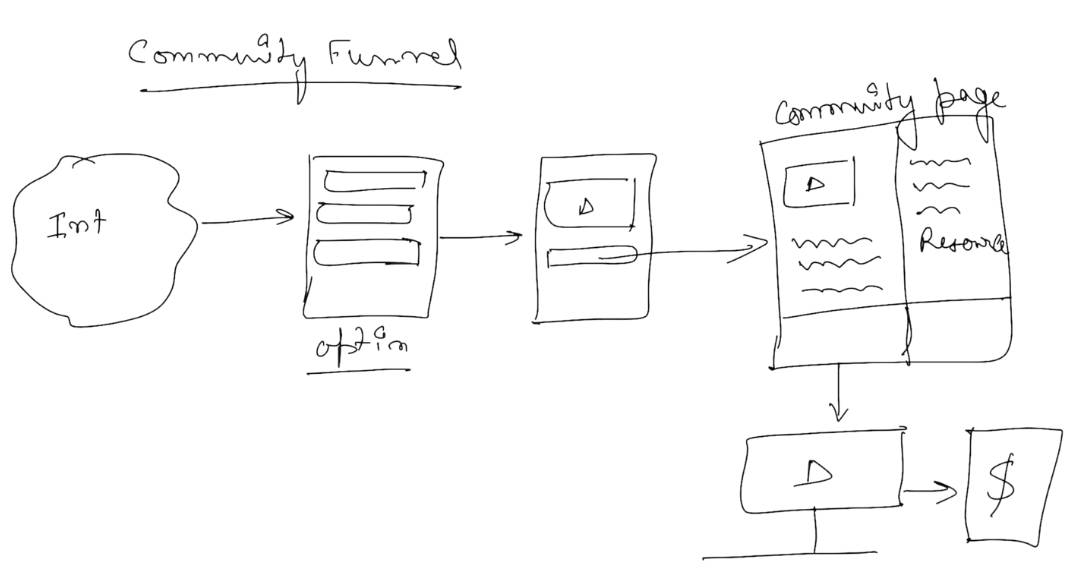
A community funnel is a strong tool that makes community growth easier. It helps draw in, engage, and keep community members by offering valuable content, solving problems, and starting interesting chats.
And most importantly, it helps you monetize your passion by offering your courses, products or service right without getting overwhelmed.
In this video I walk through each stage of the community funnel:

Use your current channels like email newsletters, blog posts, and social media to advertise your community, inviting your audience to join the chat.
Connect with your audience by finding out their needs and worries, and solving them through the community. This not only brings in new members but also strengthens the bond with current ones. Keep in mind, growing a community is a two-way street. The more you give, the more engaged your community becomes.
Running Giveaways Carefully
Giveaways can speed up growth, but they attract people who want the prize, not the community. The fix is a reward only your ideal member would value, like a review of their work, a template built for their problem or a call with you.
Used this way, giveaways are a tried-and-true way to speed up community growth. Offering valuable, related rewards draws in potential members and encourages participation. This could be free e-books, exclusive webinars, or one-on-one consultation sessions.
The key is to make sure the giveaway matches your audience’s interests and goals.
Advertise your giveaways widely across multiple channels to reach more people. Use word-of-mouth marketing’s power by asking participants to share the giveaway with their connections. This broadens your reach and speeds up community growth.
The New Blood Principle: keep new members coming
A community without a steady stream of new people slowly closes in on itself. Conversations repeat, and the same few members do all the talking until they drift away too. The New Blood Principle is my name for the fix: a steady stream of new, aligned people joining every week.

Three habits keep new blood flowing:
- Pin your community on your profile. When you add value in other communities, people check your profile, and a pinned link turns that curiosity into a join without a pitch.
- Publish on authority spaces. Articles, podcasts and guest posts on sites your audience already trusts bring people who arrive warm.
- Work your Dream 10. List the 10 people your audience already follows, then find ways to partner with them, appear on their platforms or join their inner circle.
Grow through Skool Discovery
If your community runs on Skool, the platform itself can send you members. Skool Discovery ranks groups by growth, activity and retention within each category. Its Growth Boost, on by default, can promote your group in search and off-site ads, and Skool keeps a commission (30% in its example) on the paying members it brings.
That makes Discovery one of the few channels that works without an audience, once the group meets Skool’s listing threshold.
Onboarding: keep the members you already have
Growth leaks when new members join and go quiet. In my experience, the first week decides whether someone becomes a regular, so onboarding deserves as much attention as acquisition.
A simple onboarding flow:
- A welcome post or DM that names the member and tells them where to start.
- One easy first action, like an introduction post with a prompt.
- A reply from you or a member within a day of their first post.
- A check-in after a week for anyone who has not posted yet.
Members who post in their first week tend to stay, and members who stay are the ones who invite others.
Referrals that don’t feel forced
Your best growth channel is a happy member telling a friend. The easiest moment to ask is right after a win: a member shares a result, and you ask who else they know who would want the same.
On Skool’s Pro plan, members can join its affiliate program and earn a commission on the paying members they refer. Even without money involved, a monthly “bring a friend” thread or a shout-out for members who invite others keeps referrals visible.
A 90-day growth plan
- Days 1 to 30: seed the space, write your welcome flow and personally invite your first 50 to 100 people.
- Days 31 to 60: serve in two or three other communities each week, pin your group on your profiles and start a weekly ritual inside your own group.
- Days 61 to 90: launch your community funnel, reach out to your Dream 10 and ask happy members for referrals.
Repeating the cycle every quarter, with a sharper offer each time, is how 100 members becomes 1,000.
Metrics that show healthy growth
Member count alone hides problems. These four numbers tell you whether growth is real:
- New members per week: a steady number beats one big spike.
- First-week posting rate: the share of new members who post within seven days.
- 30-day retention: the share of members still active a month after joining.
- Active share: the share of all members who posted or commented this week.
If new members rise but retention falls, fixing onboarding comes before pushing for more. Member-to-member activity matters more than reach, which is the core difference between a community and an audience.
Tools that help you grow
Kit (formerly ConvertKit)
Kit, called ConvertKit until October 2024, is an email marketing and automation platform that allows you to build and nurture relationships with your community members. It provides features like email sequencing, personalized email campaigns, and automation workflows, helping you engage and communicate effectively with your audience.
Skool
Skool is a community platform designed to prioritize engagement and foster meaningful interactions. With its minimalist approach, Skool provides a distraction-free environment for your community members. It offers features like discussion threads, direct messaging, resource sharing, and event management, allowing you to create a vibrant and connected community.
I reviewed 5 community tools in this video.
Thrive Themes
Thrive Themes turns a WordPress site into a sales funnel, which helps you monetize your community. You can build landing pages, capture leads with opt-in forms, and run sales pages for your products or services without coding. I use it for my own funnels, and it lets you convert community members into paying customers from a site you own. If you would rather not run WordPress, ClickFunnels gives you funnels and a checkout on a hosted platform.
Keeping Community Engagement Going
Getting your first 1,000 members is a big milestone, but the work doesn’t stop there. Keeping your community engaged decides its long-term success. About 1,000 core paying members is enough to earn a living, which is the 1,000 members principle.
Regularly create high-quality content, actively respond to feedback, and keep updating your engagement tactics. Remember, a small, active community is much more valuable than a large, inactive one.
Conclusion
Growing an online community can greatly improve your business’s value.
It lets you build deep connections with your audience, earn trust, and create long-term loyalty. A steady stream of new members, a strong first week and a few referral habits are what carry a community from 100 to 1,000.
FAQ
How long does it take to get 1,000 community members?
In my experience, 6 to 18 months for a community that starts from zero, depending on your existing audience and how consistently you invite people. Creators with an email list or a following can get there in weeks, while most groups grow slowly through the first 100 and faster after that.
How do I get the first 100 members for my community?
Through personal invitations, one by one, to people you already know who share the problem. Seeding the group with a few useful posts first and offering founding members a lower price or a special role makes the first yes easier.
Should I use giveaways to grow my community?
Only with care. A giveaway attracts people who want the prize. A reward that only your ideal member values, like a review of their work or a call, brings better members than a gadget.
How many active members does a community need?
In my experience, a community feels alive once 20 to 30 members post or comment each week. Below that, conversations stall and new members leave, so early growth matters less than getting a core group talking.
Is 1,000 members a lot for a community?
For a niche or paid community, yes. A thousand engaged members can sustain conversations without you, and a thousand paying members at $49 a month is $49,000 a month before expenses.
The Letter
Get the next article in your inbox.
What I am building, as it happens. The experiments, launches and numbers behind my own one-person business, including what did not work.
The tools, tested before I recommend them. Short notes on the platforms I try for selling courses, running a community and sending email, before they become full reviews.
The inner side of the work. Ideas on focus, meaning and energy for solo founders who want a business that feels as good as it performs.
Get The Letter in your inbox
One short email, usually weekly. You can unsubscribe any time.
Keep reading
More from Community building.

2 comments
Hello my loved one I want to say that this post is amazing great written and include almost all significant infos I would like to look extra posts like this
Appreciate. What was your biggest takeaway?