Brutal Nas.com (Nas.io) Review: Is the All-in-One Creator Platform Even Worth It?

If you want to monetize your content or audience, creating community can be a smart choice. Nas.io promised new ways to engage with and monetize your audience, and in 2026 it changed shape. Nas.io is now Nas.com, the free plan is gone, and the product sells itself as an AI storefront for solopreneurs.
But is it still a good platform to create your online community, or just another overhyped tool?
This is my honest Nas io review. And it’s not sponsored.
Nuseir Yassin of Nas Daily founded it, and the product shows real research on its target customers.
I am currently helping entrepreneurs learn Conscious Sales strategies and built my community on Skool.
But Nas.io offers an alternative approach to community monetization, and how it stacks up against Skool, Whop, Heartbeat and Mighty Networks decides whether it fits you.
Affiliate disclosure: Some links on this page are affiliate links. If you buy through them, I may earn a commission at no extra cost to you. If you do not want, feel free to not click on them. But I will appreciate if you use them.
Nas.io is now Nas.com: what changed in 2026
Nas.com says 350,000 entrepreneurs use it. For community builders, the core idea has not changed: you charge for access to a group your members already use.
What is Nas.com (formerly Nas.io)?
Nas.com (formerly Nas.io) is a platform designed to help content creators, influencers, and brands manage and monetize their communities. Since 2026 it also leads with an AI storefront and AI marketing tools for solopreneurs.
It offers tools for creating memberships, hosting events, and selling courses and digital products, all while connecting to popular messaging apps like WhatsApp, Discord, and Telegram.
While most community platforms focus on importing entire communities on their native apps, Nas offers direct monetization without migration.
These are some interesting features I found, including for WhatsApp groups:
- Super WhatsApp: Manage paid WhatsApp communities with automated membership and payments, broadcasts and member export, without WhatsApp’s 2,000-member group limit (plan caps still apply).
- Paid Membership: You can set up recurring or one-time payment memberships to monetize your community.
- Courses & Coaching Builder: Create and sell courses, or offer paid 1:1 coaching sessions.
- Audience Management: Collect and manage audience data, send emails and messages directly, and export data as needed.
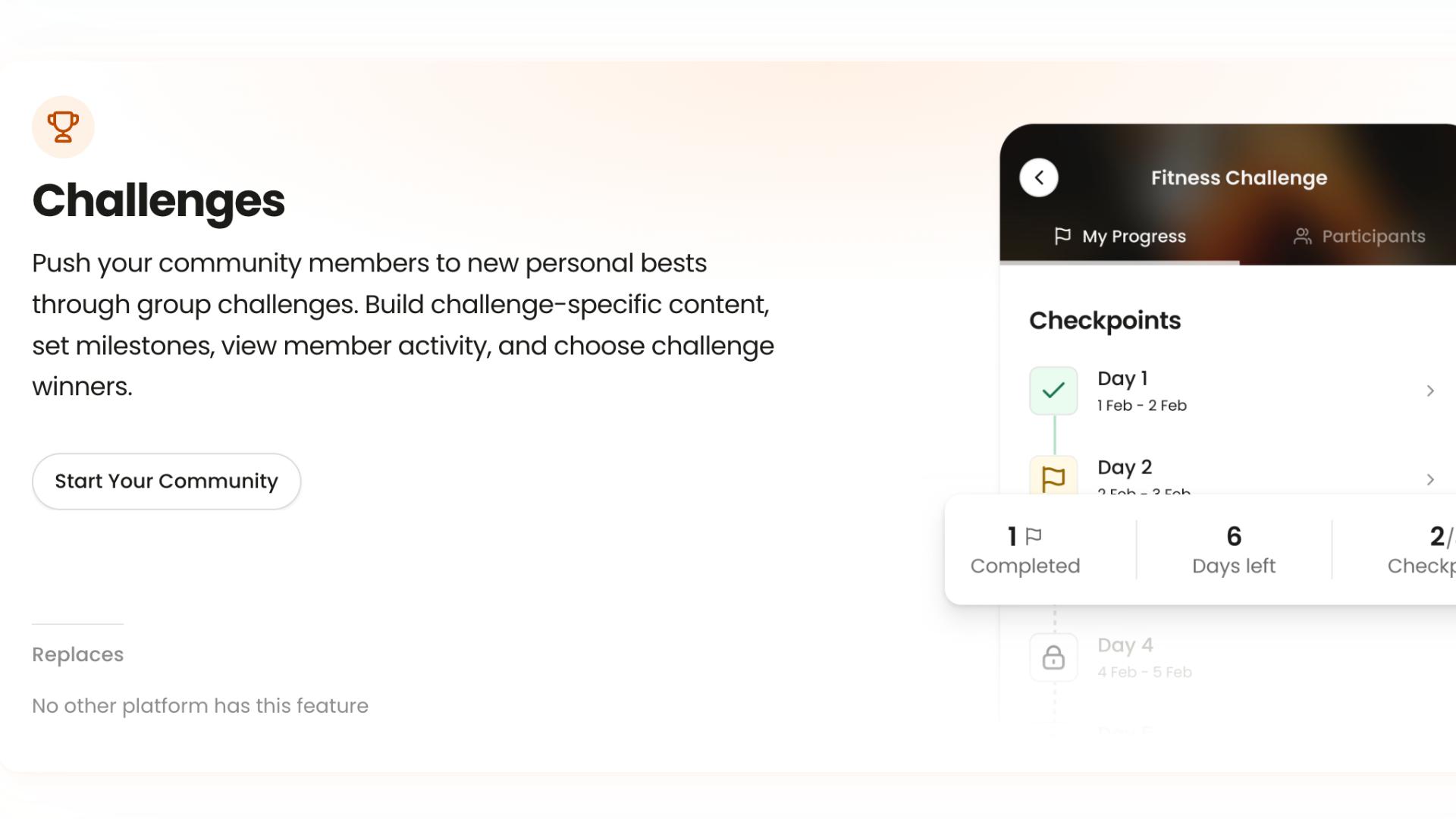
- Challenges: Build and manage group challenges, set milestones, and track member progress. This one caught my eye.
- Events Management: Host and manage virtual or in-person events, sell tickets, and track attendance.
Onboarding and experience
Getting started with NAS.IO is straightforward. You sign up on their website and follow the instructions to set up your profile. Then you can customize your community page and link your preferred messaging apps. Finally, you can set up membership options and start creating courses, events, and challenges to engage your community.
While the setup process is user-friendly, some users may find integrating multiple apps challenging.
Lots of feature set can also be overwhelming initially. However, I found they have provided dedicated customer support and active community forums to handle this challenge. They also have a dedicated webinar, product demo and community support to help you get started with the platform.
Nas Customization options are plentiful, allowing you to tailor your community pages to your liking, but this may require some familiarity with the platform.
Is Nas.com legit? What users say
On Trustpilot, Nas.com holds a 4.3 TrustScore from 464 reviews, and 73% of them are five stars. The one-star reviews focus on refunds and on how hard it is to reach a human in support.
Integration Capabilities
One of NAS.IO’s strengths is its integration with various messaging and social media platforms, allowing you to manage your community across multiple channels. You can connect Nas.com with WhatsApp, Telegram, Discord and Slack.
Other apps connect through Zapier, which works one way, with triggers for new members, new orders and cancellations. Nas.com’s help center says there is no direct webhook support, and I found no public API documentation.
Customer Support and Community
Pro includes priority chat support, and Platinum adds priority support and a dedicated account manager. Some Trustpilot reviewers report slow replies and trouble reaching a human.
Nas.com (Nas.io) pricing and fees in 2026
Nas.com’s April 2026 pricing guide lists three plans, though the live pricing page currently shows only Pro and Platinum:
- Basic: $9 a month ($6.58 billed yearly). Up to 100 members and 5 products, a community feed, email tools and a landing page.
- Pro: $29 a month ($20.75 billed yearly). Up to 10,000 members, 3 managers, Magic Ads, Magic Reach, payment links and priority chat support.
- Platinum: $99 a month ($66.58 billed yearly). 100,000+ members, 10 managers, on-demand payouts, affiliate tools and a dedicated account manager.
On top of the plan, Nas.com takes a fee on every digital sale. For US accounts it is 4.9% on Basic, 2.9% on Pro and 1% on Platinum, plus a 2.9% + 30¢ gateway fee. Cards issued outside the US add 1.5%, physical products carry no Nas.com fee, and Nas.com’s own fee is higher in India.
You can still let your members pay these fees at checkout, or pay them from your revenue on each transaction.
Consider this for example:
If one person pays $100 a year by US card on the Pro plan and you absorb the fees, you keep about $93.90. With 100 members, that is about $9,390 a year, or about $9,141 after the yearly Pro plan.
The old 7.9% fee with no plan price made Nas cheap to start but costly as you scaled. The 2026 plans fix part of that, because a paid plan now buys a lower fee.
Personally, I would pick the plan with the lower fee early, since communities are hard to move from one place to another. It might seem a big investment in the beginning but a better idea in the long run.
And in the end, this is an investment worth making if you want to build a successful community-focused online business.
Who is this for?
NAS.IO is highly diverse, making it suitable for various use cases:
- Content Creators: Monetize digital content through memberships and courses.
- Brands: Engage with audiences through exclusive events and digital products.
- Influencers: Create unique experiences and products for followers.
- Chat-group owners: Charge for a WhatsApp, Telegram or Discord group without moving members to a new app.
NAS.IO Alternatives
There are a few alternatives in the market for this platform. Notably Whop, Skool and Mighty network. Also, Circle is gaining a lot of popularity for small business owners and online creators.
Circle gives you your own domain and more branding, while Skool is cheaper at most revenue levels, which is the core trade-off in Skool vs Circle. Both host the community in their own app, unlike Nas.
NAS.IO vs Skool
Skool and Nas.io target the same audience: Creators and influencers. The only big difference is their pricing and approach to community building.
Pricing Comparison
Skool costs $9 a month with a 10% + 30¢ fee on Hobby, or $99 a month with 2.9% + 30¢ on Pro (3.9% + 30¢ above $900), card processing included.
On the other side, Nas.com’s April 2026 pricing starts at $9 a month on Basic or $29 on Pro, with a 4.9% or 2.9% fee plus 2.9% + 30¢ processing on digital sales.
Feature comparison
Nas offers a direct monetization of your audience with Whatsapp communities, Discord and Telegram while Skool is a native app that lets you build your community.
I found this approach little complicated since you need two places to setup your community. Also having too many features only end up losing interest of the members.
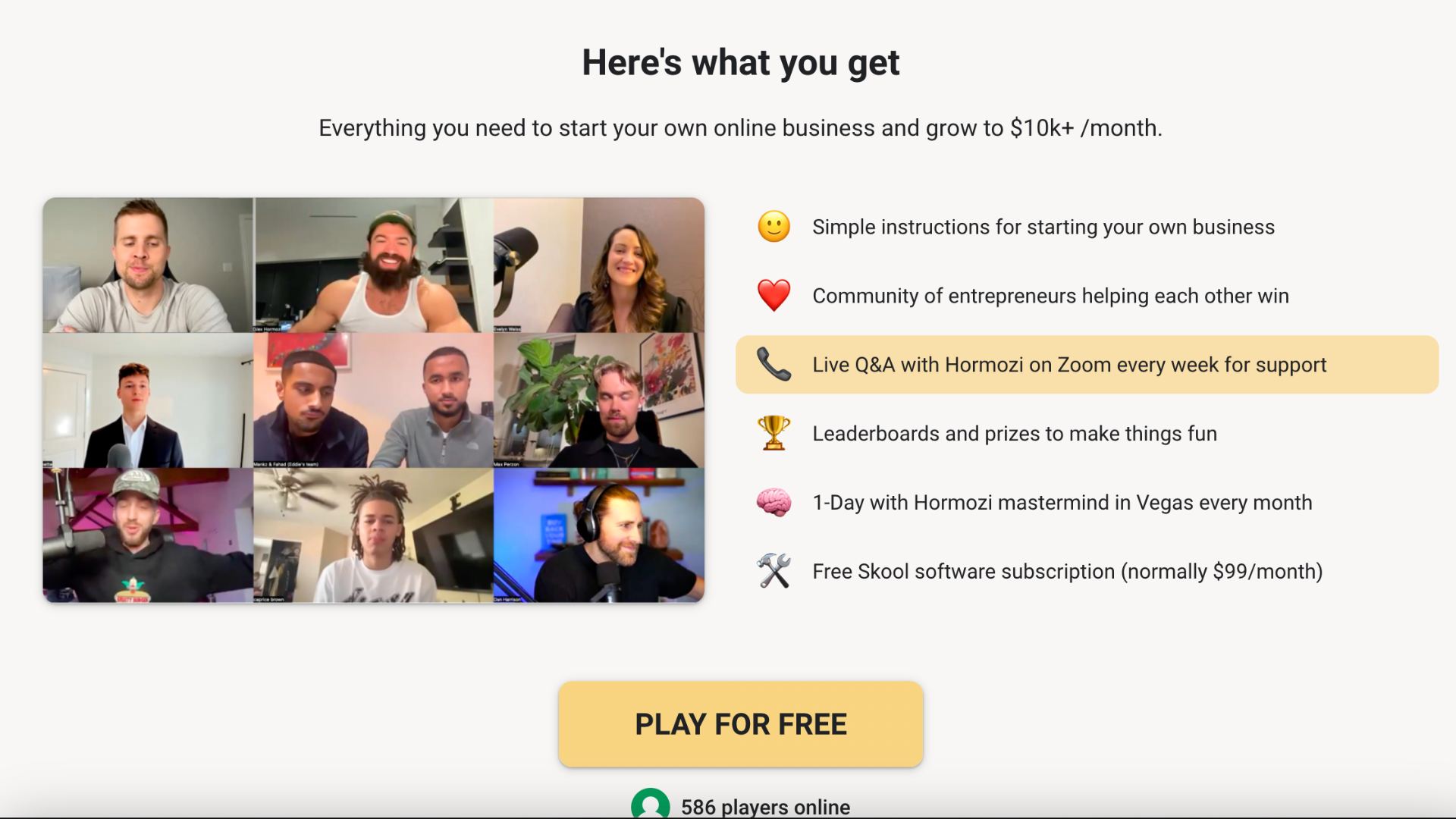
On the top of this, Skool’s SEO and discovery feature offers a great benefit since you can get organic visibility to your work. You can try it free for 14 days. Skool also runs the Skool Games, a competition that helps owners grow income with their communities. Check out the Skool Games.
So in short,
- Skool: Easier to use, better for community engagement, but lacks integration features like Nas.
- NAS.IO: Advanced integration and monetization tools, but overemphasises on features than the main goal of community engagement.
NAS.IO vs Whop
Whop is closer to what Nas does than Skool. Just like Nas, it also has direct integration with Telegram and Discord.
It focuses on content subscriptions and membership management and getting more popularity among trading and gaming communities. Their marketplace is one of the best ways to get significant discovery for your community.
Nas in comparison lacks this feature of Whop marketplace. However, some native features like Challenges and Event management beat Whop.
On the other hand, Whop has no monthly fee and charges 2.7% + 30¢ per domestic card sale, plus 3% on products gated through its Discord or Telegram app. It might be cheaper than Nas but also comes with the compromise with features.
To quickly sum up:
- Whop: Simpler for managing memberships, but less robust in features.
- NAS.IO: Better for comprehensive community management and event hosting.
You can start with Whop for free.
NAS.IO vs Heartbeat
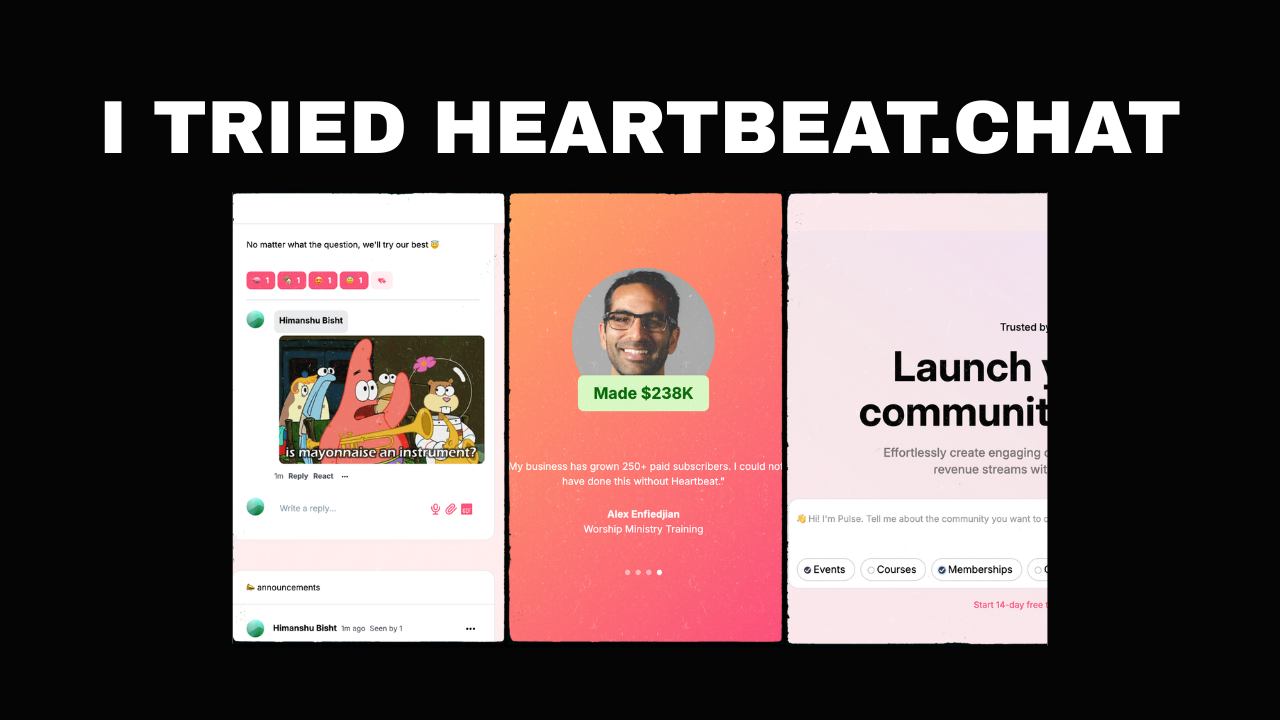
Heartbeat ($49 a month plus 5% on its Build plan, with Stripe’s fee on top) hosts the whole community, courses and cohorts inside its own app. Nas.com keeps members in their chat app. If your program needs structured courses, assignments and events in one place, Heartbeat fits better.
NAS.IO vs Mighty Networks
Mighty is one of the oldest community management platforms with tens of features. You can do almost everything you can image with your communities on Mighty: creating courses, hosting events, personalized DMs, automation… phewwww.
But unfortunately, Mighty’s too many features only end up overwhelming members. In my experience, Mighty is better for support groups and not made for creators. Think of it as your own social media network.
Is Nas.io Worth your attention?
NAS.IO has some notable features like messaging-app integrations and scalability. That makes it suitable for both small and large communities.
However, the platform’s complexity and cost might be prohibitive for some users. Despite these drawbacks, many users praise NAS.IO for its innovative features and potential for monetization. It used to be free to start, but the free plan ended in March 2026. The pricing page lists a 7-day trial, then a paid plan.
If you are looking for a dedicated community space with a cleaner experience, you might want to check Circle.so, which offers many other advantages. Like Circle, most Skool alternatives and other community platforms I tested keep members in their own app instead of a chat group.
Or if you want to get more 1:1 clients and monetize your knowledge, Skool can be a better platform.
Regardless of your platform of your choice, here is an important thing to understand about building online communities:
Community building is not a hack or trick. It takes human-to-human work and dedication.
Check out our free program The Community Funnel Workshop if you want to build your online community on any platform of choice including Nas.io, Circle or Skool.
Nas.com FAQ
What is Nas.com?
Nas.com, formerly Nas.io, is a platform for creators and solopreneurs to sell memberships, courses, challenges, events and products, often to members of an existing WhatsApp, Telegram or Discord group. Since 2026 it also offers an AI storefront and AI marketing tools.
Is Nas.io the same as Nas.com?
Yes. Nas.io rebranded to Nas.com, and nas.io now redirects to nas.com. It is the same company, founded by Nuseir Yassin of Nas Daily.
How much does Nas.com cost?
Nas.com’s April 2026 pricing lists Basic at $9 a month ($6.58 billed yearly), Pro at $29 ($20.75 yearly) and Platinum at $99 ($66.58 yearly). Fees on digital sales come on top.
Does Nas.com still have a free plan?
No. Nas.com phased out its free plan on March 31, 2026. Businesses that did not move to a paid plan are locked until they subscribe.
How do Nas.com fees work?
For US accounts selling digital products, Nas.com takes 4.9% on Basic, 2.9% on Pro and 1% on Platinum, plus a 2.9% + 30¢ gateway fee. Physical products carry no Nas.com fee, and you can pass both fees to customers at checkout.
Can I charge for a WhatsApp group with Nas.com?
Yes. Nas.com lets you charge a recurring membership fee for access to a WhatsApp group, with automated member management, broadcasts and member export, so members stay in WhatsApp.
Is Nas.com legit?
Yes. Nas.com is backed by a $27M Series A led by Vinod Khosla (April 2026) and holds a 4.3 TrustScore on Trustpilot from 464 reviews. Its one-star reviews focus on refunds and reaching human support.
The Letter
Get the next article in your inbox.
What I am building, as it happens. The community experiments, launches and numbers behind my own work, including what did not work.
The tools, tested before I recommend them. Short notes on the platforms I try for running communities, courses and email, before they become full reviews.
The inner side of the work. Ideas on focus, meaning and energy for creators who want a business that feels as good as it performs.
Get The Letter in your inbox
One short email, usually weekly. You can unsubscribe any time.
Keep reading
More from Community building.