I Tested Skool v/s Teachable for Course Business! (2026 Update)

Teachable has been one of the oldest ways to sell online courses and build a course business. You upload videos, add some information, pick a plan and you are set to launch. But lately, Skool has offered a new integrated way of promoting your online courses and events. Instead of offering your course you create an online community and offer online courses inside. But does Skool live up to it, or is Teachable still the better course platform?
The quick summary:
- Skool is a community-first platform, Teachable is a course hosting platform.
- In my view, Skool’s creator community teaches more about making money online than Teachable’s resources do.
- Skool has two plans: Hobby at $9 a month plus 10% + 30¢ per sale, and Pro at $99 a month plus 2.9% + 30¢. Teachable has three public plans. Starter costs $29 a month billed annually with a 7.5% fee. Builder costs $69 with 0% on Teachable Payments and an affiliate program, and Growth costs $139 with certificates.
- Skool runs the Skool Games, a competition with training for Skool community owners. Teachable offers education through its newsletter and YouTube videos.
- Teachable is more suitable for online courses while Skool is better for community-driven online business with embedded online courses.
Affiliate disclosure: Some links on this page are affiliate links. If you buy through them, I may earn a commission at no extra cost to you. I will appreciate if you use them.
Skool: The Community Platform for Creators
Skool was born from the vision of Sam Ovens, an entrepreneur who saw the need for a platform built around engaged online communities rather than course catalogs.
At its core, Skool is designed to be a community-centric hub where creators can not only host courses but also nurture deep connections with their audience through gamification and social features.
Feature Comparison for Skool
- Course Hosting: Skool offers robust course hosting capabilities, allowing you to create and deliver engaging learning experiences for your community members.
- Personalized Leaderboards: Gamification is a key component of Skool. It uses personalized leaderboards as a powerful tool to incentivize engagement and create a sense of friendly competition among your members.
- Member Profiles: Skool’s member profiles go beyond basic user accounts, enabling members to showcase their achievements, connect with others, and build a sense of belonging within your community.
- Chat and Follow System: Facilitate real-time communication and networking among your members with chat and follow features, fostering deeper connections and collaboration.
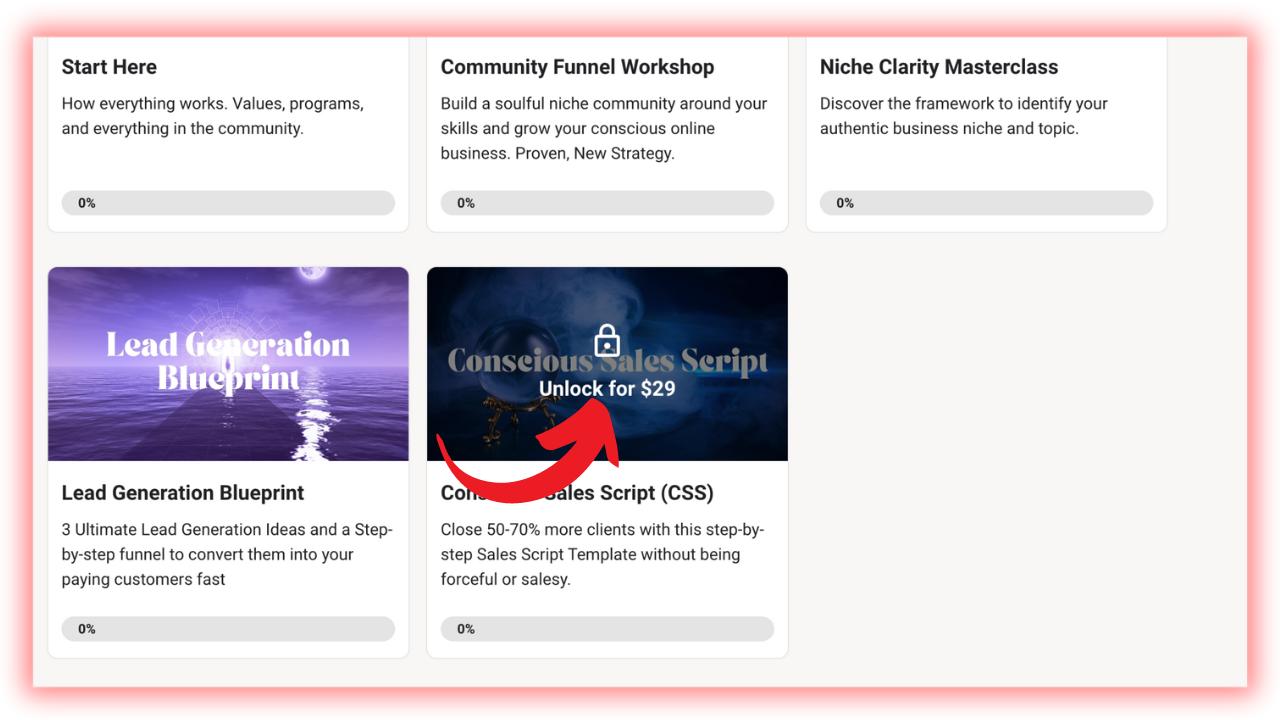
- Subscriptions and one-time sales: You can charge a monthly or yearly membership, set up to three tiers, or sell a single course with a one-time “Buy Now” purchase.
- Discovery and unlimited content: Every plan includes unlimited videos, courses and live calls, and Skool’s Discovery directory can send you members. Affiliates and a custom URL come with Pro.
Skool can be considered as the go-to platform for coaches, consultants, and information entrepreneurs who prioritize building engaged communities around their brands.
Teachable: The Course Creation Powerhouse
On the other hand, Teachable is a platform focusing on empowering online educators, experts, and influencers to create and sell quality courses. Think of it like Udemy but your own.
Teachable has closed its Community feature to new schools, so its strength lies in course creation, payments and tax handling.
Feature Comparison for Teachable
- Intuitive Course Builder: Teachable’s course builder makes it easy to create professional-looking courses, even for those with limited technical skills.
- Quizzes and certificates: Auto-graded quizzes and short-answer assessments come on every plan, and certificates of completion arrive on Growth.
- Sales tools: Sales pages, coupons, upsells, cart recovery and an affiliate program (Builder and up) help you sell without extra software.
- Pricing Options: One-time payments, subscriptions and payment plans let you match how your audience buys.
- Student apps and tax handling: Students get iOS and Android apps, and Teachable handles US sales tax and global VAT for you.
- Community: A community space is included from the Builder plan, next to lesson comments.
Teachable’s course creation tools and marketing features make it a better choice for those seeking to establish themselves as authorities in their respective fields.
Skool vs Teachable pricing and fees
The plan price is only part of the bill, because both platforms take a percentage of sales on some plans.
Skool: Hobby costs $9 a month plus 10% + 30¢ per sale. Pro costs $99 a month plus 2.9% + 30¢ (3.9% + 30¢ on sales above $900). Card processing is included, and both plans start with a 14-day free trial.
Teachable: Starter costs $29 a month billed annually ($39 monthly) with a 7.5% transaction fee and 5 products. Builder costs $69 ($89 monthly) with 0% on Teachable Payments, 10 products and an affiliate program. Growth costs $139 ($189 monthly) with 50 products, certificates and no Teachable branding. Card processing of 2.9% + 30¢ applies on top for US cards.
These monthly costs assume $50 payments on US cards, annual billing for Teachable and monthly billing for Skool:
On these terms, Builder costs about $30 a month less than Skool Pro at every level. Like for like, the gap is about $14 when both bill yearly and $10 when both bill monthly. Skool Hobby costs more than Pro once sales pass about $1,270 a month, and Teachable Starter costs more than Builder above roughly $530.
My personal Experience with Teachable and Skool
You might say since I am using Skool I might be biased to lean towards the platform. And you will be fair with your point.
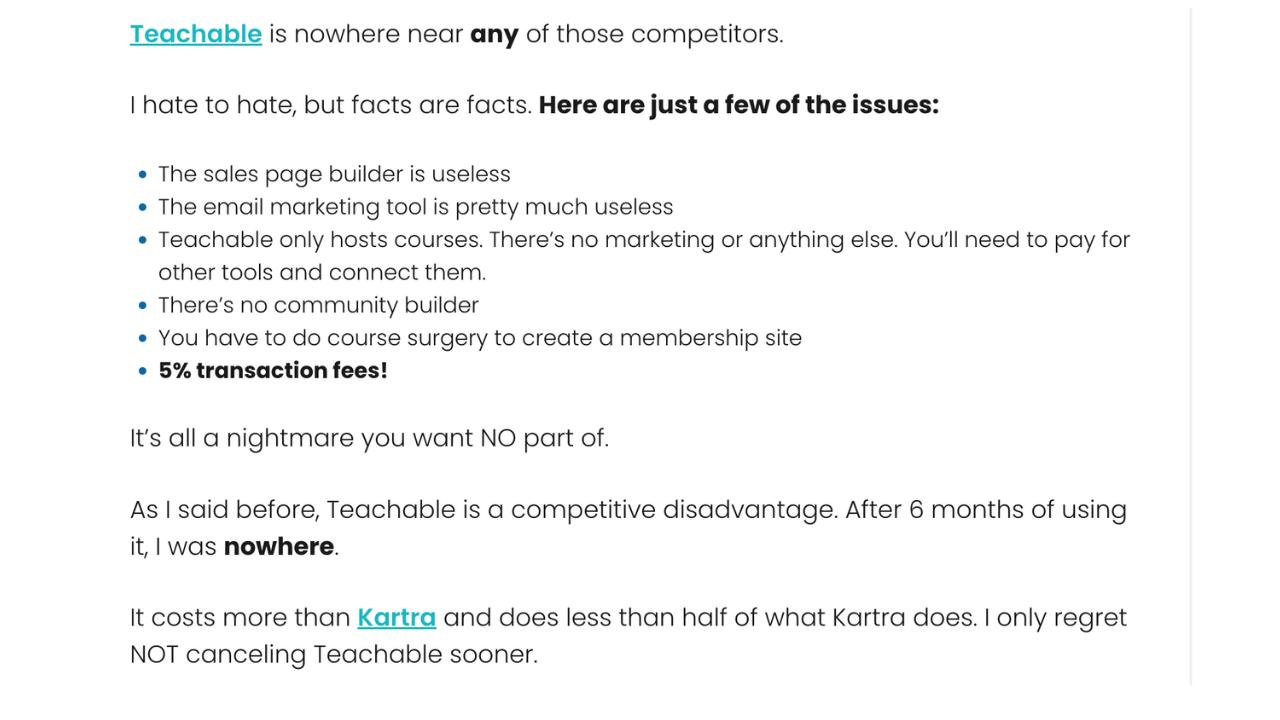
This is why as I was working on this article I did my own research. I found many similar incidents with Teachable. For example, Dreamglow wrote the following in their review:
On the other side, Skool also has its own flaws. I have covered some in my Skool review on YouTube.

Trying both products yourself is still the best test. Since you will be investing in your business, first-hand experience matters more than any review.
In-Depth Feature Comparison
Course Creation and Delivery
When it comes to course creation and delivery, both Skool and Teachable offer powerful capabilities, but with distinct approaches.
Skool:
- Simplified course creation process
- Rich multimedia support (videos, audio, text)
- Courses that unlock by level, on a schedule, by tier or by one-time purchase
- Student progress tracking
- No quizzes or certificates
Teachable:
- Intuitive and feature-rich course builder
- Comprehensive multimedia support, including quizzes, and certificates on Growth
- Advanced curriculum management and content structuring
- Student engagement and assessment tools
While Skool provides a streamlined approach to course creation, Teachable offers more advanced features and granular control over the learning experience.
Community Engagement
Community engagement is where Skool truly shines, thanks to its gamification and social features.
Skool:
- Personalized leaderboards and achievement tracking
- Member profiles, chat, and follow system
- Discussion forums and feedback loops
- Gamification elements (points, levels, level-based feature unlocks)
Teachable:
- Lesson comments on every plan
- Community closed to new schools; existing communities stay
- No leaderboard, points or level unlocks
If building a highly engaged and interactive community is your top priority, Skool’s gamification and social features give it a significant advantage over Teachable’s more basic community tools.
Sales and Marketing
Both platforms offer robust sales and marketing capabilities, but with slightly different approaches.
Skool:
- Subscriptions, tiers and one-time course purchases
- Integration with external sales funnel builders through Zapier (Pro)
- Email marketing integrations through Zapier (e.g., Kit)
- Member affiliate program on Pro
- Limited native marketing and sales tools
Teachable:
- Multiple pricing options (one-time payments, subscriptions, payment plans)
- Built-in checkout, and an affiliate program from Builder
- Coupons, upsells and cart recovery
- US sales tax and global VAT handled for you
Monetization Models
The monetization strategies of Skool and Teachable differ significantly, catering to different business models.
Skool:
- Subscription model for community access and course content, plus one-time course sales
- Ideal for recurring revenue and long-term customer relationships
- Online courses embedded inside the community
Teachable:
- One-time course sales or subscription-based pricing
- 7.5% fee on Starter, 0% on Builder and above with Teachable Payments
- Flexible pricing options for individual courses or course bundles
Skool’s subscription model aligns well with community-focused businesses, while Teachable’s pricing options cater more to traditional course creators and online educators.
User Experience and Support
Both platforms prioritize user-friendliness and provide dedicated support resources, but with slightly different approaches.
Skool:
- Clean, modern, and intuitive user interface
- Community-based support and knowledge sharing
- Personalized email support for customer inquiries
Teachable:
- User-friendly interface with a focus on course creation
- Comprehensive knowledge base and tutorial resources
- Direct email and chat support for instructors
As I said in the beginning, my experience with Teachable was very poor. However, this might be different now. While Skool leverages its community for support and knowledge sharing, Teachable offers more traditional support channels and extensive self-help resources. Skool has active community admins to answer any questions if asked.
Factors to Consider
As you weigh your options between Skool and Teachable, consider the following key factors to ensure you make the right choice for your specific needs:
- Primary Goal: Are you primarily focused on building an engaged community or creating and selling courses? Skool excels at community building and promoting courses within, while Teachable is tailored for course creation and delivery.
- Preferred Teaching/Learning Styles: Do you prefer an interactive, gamified learning experience, or a more traditional, self-paced approach? Skool’s gamification features cater to the former, while Teachable aligns with the latter.
- Importance of Engagement Features: If creating discussions, social interactions, and gamification elements are crucial for your audience, Skool’s community features may be a better fit.
- Budget and Long-Term Scalability Plans: At the same sales, Teachable Builder and Skool Pro cost within about $10 to $30 a month of each other, depending on billing. Both entry plans, Teachable Starter and Skool Hobby, get expensive fast because of their percentage fees.
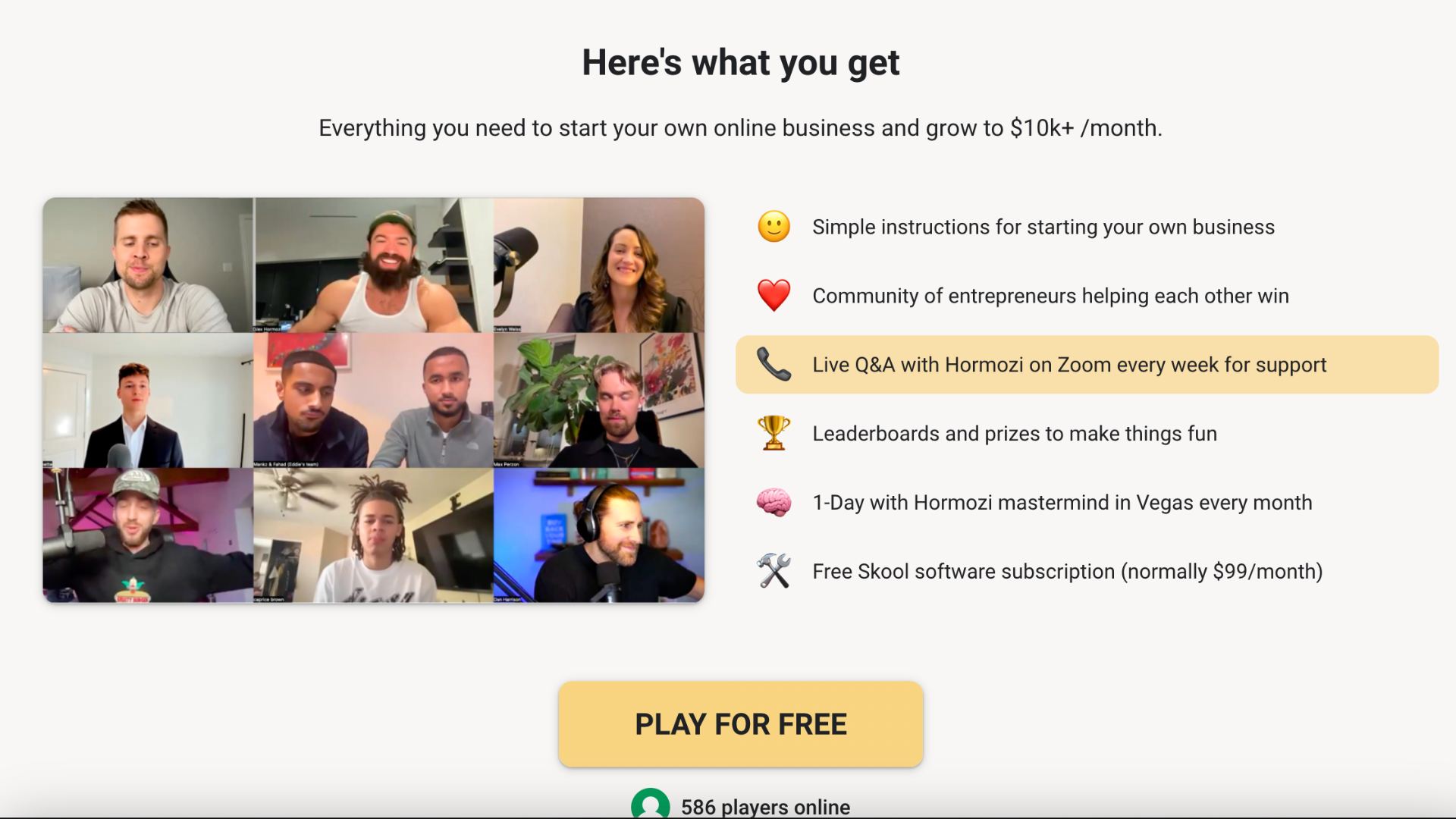
- Education and support: If you are looking for a supportive space to build your information business, Skool games can be the right place to begin. If you are going for Teachable, then subscribing to their weekly newsletter is a good place to get the necessary education.
The Verdict: Which Platform is Right for You?
Skool is the Ideal Choice If:
- Your primary focus is building an engaged and thriving online community around your brand or expertise.
- You value gamification and social features to foster deeper connections and increase member retention.
- You plan to monetize through subscription-based memberships or tiered access levels.
- You prefer a streamlined, community-centric approach to course creation and delivery.
Teachable is the Ideal Choice If:
- Your primary goal is to create and sell high-quality online courses in your niche or area of expertise.
- You prioritize advanced course creation tools, multimedia support, and granular curriculum management.
- You require robust marketing and sales tools to promote and monetize your courses effectively.
- You prefer a platform tailored specifically for online educators and course creators.
Ultimately, both Skool and Teachable are powerful platforms, but they cater to different needs and business models.
The Bottom Line: Explore and Leverage Free Trials
Whichever platform piques your interest, the best way to truly evaluate its suitability for your business is to take advantage of their free trial periods.
Skool offers a 14-day free trial. Teachable offers 7 days as standard, extended to 30 days under a current offer.
Joining the Skool Games during your trial is a good way to see if Skool fits your goals. On Teachable, building one small course during the trial shows how the course builder feels.
In the end, Teachable and Skool are just tools. It is up to you to make use of them. If you want to learn more about Skool Games, you can watch this video.

If neither fits, Kajabi and Circle cover the middle ground. Kajabi bundles courses, email and funnels from $143 a month billed yearly, and Circle gives a community its own domain from $89. Whop, Podia and Systeme.io are cheaper Skool alternatives for smaller budgets.
Skool vs Teachable FAQ
Is Skool better than Teachable?
For a community-led business, yes: Skool’s feed, gamification and Discovery keep members active and can bring new ones. For a course-first business, Teachable is better, with quizzes, student apps and sales tax handling built in, and certificates on Growth.
Is Teachable cheaper than Skool?
On its Builder plan, slightly. At $5,000 a month in sales, Teachable Builder costs about $244 a month billed annually, including card processing, against about $258 for Skool Pro billed yearly, or $274 monthly. Teachable Starter and Skool Hobby both cost far more at that level because of their percentage fees.
Does Teachable have a free plan?
No. Teachable is a paid service with a 7-day free trial, though a current offer extends it to 30 days. Its cheapest plan, Starter, costs $29 a month billed annually or $39 monthly, plus a 7.5% transaction fee.
Can you sell courses on Skool without a subscription?
Yes. Skool supports one-time course purchases, so you can sell a single course inside a free or paid group without charging a monthly membership.
Does Teachable have a community?
Not for new schools. Teachable has closed Community to new schools, while schools with an existing community can keep it. Lesson comments remain on every plan, with no leaderboard or level unlocks like Skool’s.
Which is better for a coaching business, Skool or Teachable?
Skool, in most cases. Coaching sells on access and relationship, and Skool puts calls, posts and courses in one feed. Teachable fits coaches who sell a structured course first and add coaching as an upsell.
The Letter
Get the next article in your inbox.
What I am building, as it happens. The experiments, launches and numbers behind my own one-person business, including what did not work.
The tools, tested before I recommend them. Short notes on the platforms I try for selling courses, running a community and sending email, before they become full reviews.
The inner side of the work. Ideas on focus, meaning and energy for solo founders who want a business that feels as good as it performs.
Get The Letter in your inbox
One short email, usually weekly. You can unsubscribe any time.
Keep reading
More from Community building.