How to Coach with Vertical Coaching Framework

The world is drowning in information, yet starving for wisdom.

TLDR:
- Coaching is about empowering self-discovery, not giving solutions
- Master two approaches: horizontal coaching (skill development) and vertical coaching (mindset transformation)
- The most powerful coaching skill is asking transformative questions
- People don’t have professional problems; they have personal problems reflecting in their profession
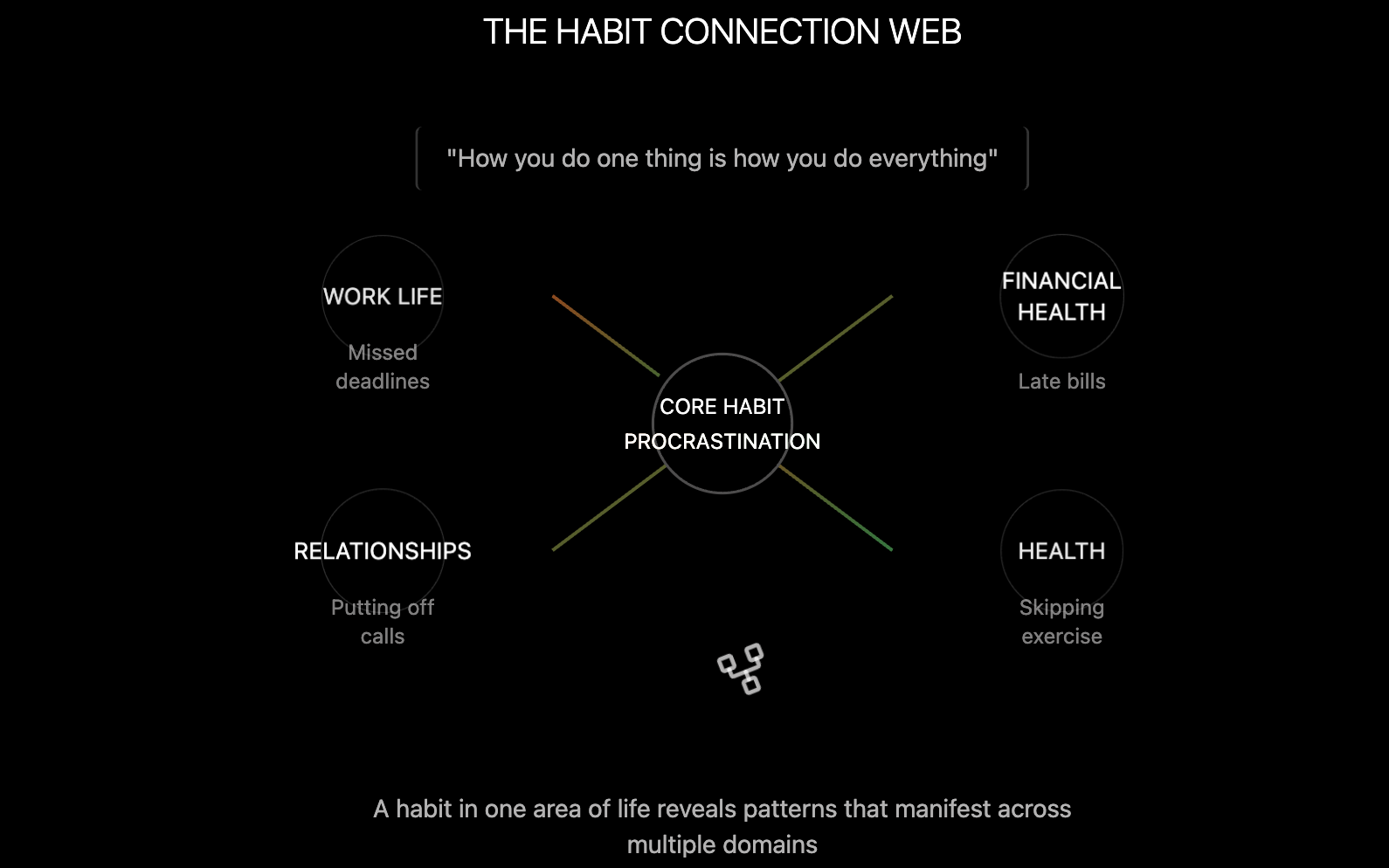
- How you do one thing is how you do everything
- Create a safe container for clients to explore and grow
- Focus on vertical coaching for lasting transformation
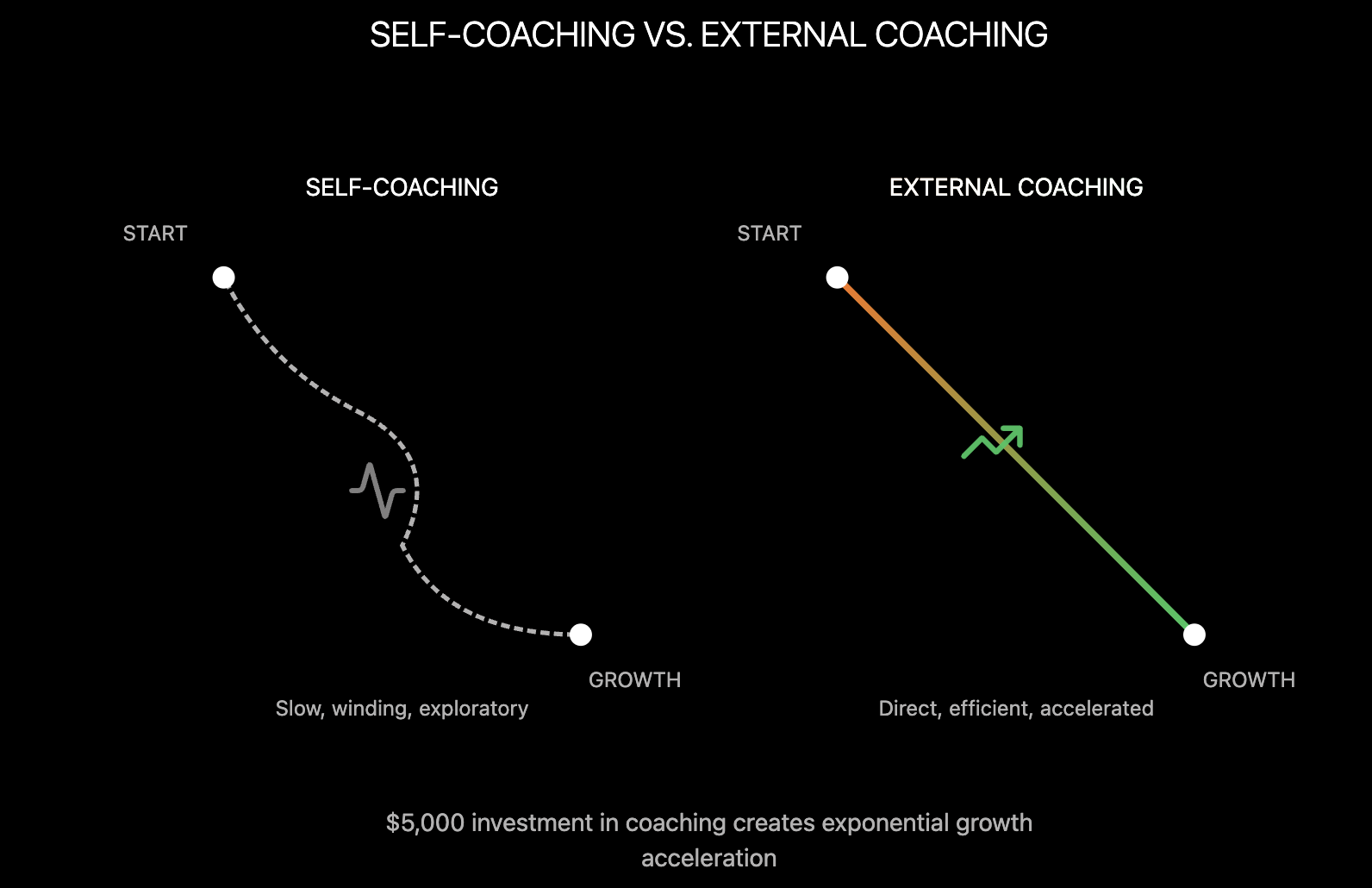
I invest more than $5,000 every year on my personal coaching because I know that without it, I’ll end up collecting mental junk. With the right guidance, I can grow faster than I ever could alone.
The True Essence of Coaching
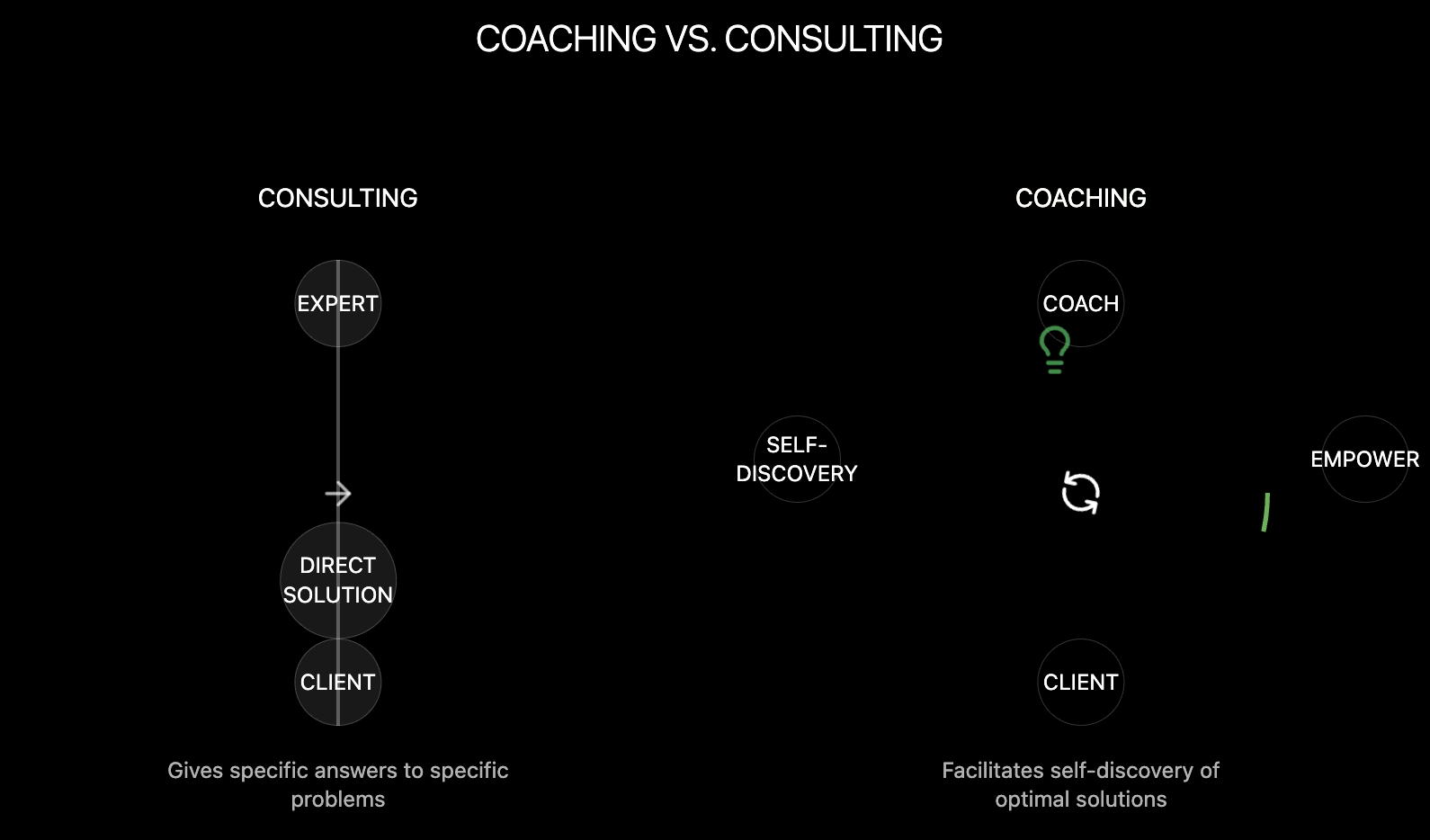
Your goal as a coach is not to offer solutions but to show clients how to discover their own solutions.
Coaching differs fundamentally from consulting.
In consulting, you tell people exactly what to do: “Run Facebook ads” or “Create this funnel.”
But coaching empowers people to tap into their own problem-solving abilities.
In the infinite possibilities of solutions to any problem, the best answer always emerges from within. As a coach, it helps to believe this deeply.
Two Powerful Coaching Modalities
Whichever methodology you use, whether NLP, psychotherapy or another framework, two fundamental approaches apply.
Horizontal Coaching: Developing Specific Skills
Horizontal coaching addresses skill gaps preventing forward movement.
If your client wants to excel at football, they need to master tackling the ball. You help them develop this specific skill to become a better player.
This approach optimizes for specific goals through targeted skill development.
Vertical Coaching: Changing How a Client Thinks
Vertical coaching dives beneath the surface.
When a client struggles in business, they rarely lack technical knowledge about Facebook ads or video creation. Instead, they battle with consistency and self-esteem.
In my experience, people don’t have professional problems. They have personal problems that reflect in their profession. This kind of growth sits near the top of Maslow’s hierarchy of needs, where a person works on who they are becoming.
Most people struggle with creating content online because they don’t believe in themselves. The modern mind often thinks new equipment will solve everything. “If I buy a better camera, my YouTube videos will improve!” But the fundamental challenges are consistency, time management, and idea development.
Vertical coaching facilitates self-discovery. By transforming someone’s perspective and behavior, you prepare them not just for one challenge, but for life itself.
The most valuable preparation is a mind that can handle whatever comes next.
When to Coach Horizontally vs Vertically
Horizontal coaching fits when the gap is a skill or a piece of knowledge. A client who has never run an ad needs to learn how, and teaching that skill is the fastest route.
Vertical coaching fits when the client already knows what to do and still doesn’t do it. Repeated patterns, stalled consistency and the same problem in new forms point to how they think, not what they know.
If a new tool or tactic would solve the problem, horizontal coaching is enough. If the client has tried several tools and the problem keeps returning, vertical coaching is the better choice. Many sessions mix both.
The Master Key: Asking Transformative Questions
The most powerful coaching skill is asking the right questions. Your effectiveness as a coach depends directly on this ability.
Weak Questions vs. Transformative Questions
A weak question like “Do you understand what I mean?” only allows yes/no answers. It creates no space for discovery or transformation.
Powerful questions build self-awareness:
- “Why do you feel this way?”
- “Where else is this showing up in your life?”
I love asking “Where else does this show up?” because how you do one thing is how you do everything. A pattern in one area of life usually manifests elsewhere too.
By asking profound questions, you initiate self-discovery. As clients explore these questions, awareness grows. Instead of imposing your judgment, you let the answer come from the client.
Vertical Coaching Questions You Can Use
Vertical questions point at the client’s thinking rather than the task.
To surface a pattern
- “Where else does this show up in your life?”
- “When have you felt this way before?”
To test an assumption
- “What are you assuming about yourself here?”
- “What would have to be true for this to work?”
To widen the view
- “How would someone you respect see this situation?”
- “What would you tell a friend in the same position?”
To find ownership
- “Which part of this is within your control?”
- “What do you get from keeping things as they are?”
Cultivating the Art of Powerful Questions
An ancient saying in Indian scriptures tells us that books only give you questions. The answers come from within. Even a simple question like why you do what you do leads back to your own thoughts, because you become what you think about.
To master transformative questioning:
- Question yourself differently. When facing challenges, approach them with investigative curiosity rather than victim mentality. This shifts from “What’s happening to me?” to “What’s happening here?”
- Embrace Brahma jijnasa, the desire to know Brahman. The Brahma Sutras open with it (1.1.1, “athato brahma jijnasa”: now, therefore, the inquiry into Brahman). With investigative intent, better answers naturally emerge from within.
- Study frameworks that expand your questioning repertoire. Your mind synthesizes information like a chemistry lab combines compounds into new forms. Feed it powerful inputs:
- Neurolinguistic programming
- Ancient wisdom traditions like Advaita Vedanta
- The Ashtavakra Gita, for example in Thomas Byrom’s translation, The Heart of Awareness
Three Conditions for Vertical Growth
Nick Petrie at the Center for Creative Leadership interviewed 30 experts in vertical leadership development. In The How-To of Vertical Leadership Development, Part 2, he names three primary conditions for vertical growth:
- Heat experiences. A complex situation disrupts the client’s habitual way of thinking. In coaching, this is often the problem the client brings to the first session.
- Colliding perspectives. The client meets people with different worldviews, backgrounds and training. A group program or community can supply this in a way one-to-one sessions can’t.
- Elevated sensemaking. A process or a coach helps the client make sense of these experiences from a broader view. Your questions do this work.
Petrie notes that many leadership programs contain one or two of these conditions but not all three.
Creating a Container for Transformation
A powerful coaching practice requires a safe space for exploration. When clients feel secure, they can dive deeper into self-discovery.
Consider creating a dedicated community around your coaching practice. This container allows clients to develop in a supportive environment where vulnerability becomes strength.
The Vertical of Growth
When working with clients, prioritize vertical coaching alongside horizontal skill development. While technical skills matter, lasting transformation comes from deeper work.
Vertical coaching prepares the mind for any future challenge. It creates enduring change and, for professional coaches, delivers greater value that clients willingly invest in.
The Coaching Mindset
It helps to hold back your opinions and solutions. Your best judgments, regardless of their merit, remain subjective opinions. They might perfectly solve your problems while missing the mark for others.
People are multidimensional, each with unique contexts and capabilities. True coaching honors the client’s innate wisdom and helps them access it.
This doesn’t mean technical advice has no place. Sometimes horizontal coaching provides necessary foundations. But always look for the vertical dimension in every client interaction.
The Self-Discovery
By changing someone’s perspective and behavior through vertical coaching, you set them up for lifelong success rather than temporary improvement.
The journey of coaching is ultimately about self-discovery, both for the client and for you as the coach. As you guide others to ask better questions, you too evolve in your understanding of human potential.
The transformation you facilitate comes not from having all the answers, but from helping others discover their own inner wisdom through the power of the right questions.
Your coaching helps people find clarity amid chaos, purpose amid confusion and strength within their perceived limitations.
FAQ
What is vertical coaching?
Vertical coaching helps a client change the way they think, so they can handle problems their current thinking can’t solve. It works through questions rather than advice. It draws on vertical development, which Nick Petrie describes in his white papers for the Center for Creative Leadership.
What is the difference between vertical and horizontal development?
Horizontal development adds information, skills and competencies. Vertical development builds more complex and sophisticated ways of thinking. Horizontal coaching suits a clear skill gap, while vertical coaching suits a problem that keeps returning even though the client knows what to do.
Is vertical coaching the same as transformational coaching?
The two overlap, but they are not the same. Both aim to change how a client sees themselves and their situation. Vertical coaching draws on adult development research and focuses on growth from one way of thinking to a more complex one. Transformational coaching is a broader label that coaches use in different ways.
How do you ask vertical coaching questions?
Open questions that point at the client’s thinking, rather than the task, tend to work best. A question such as ‘Where else does this show up in your life?’ helps a client spot a pattern. It helps to skip yes/no questions and let the client find an answer before you share your view.
The Letter
Get the next article in your inbox.
What I am building, as it happens. The experiments, launches and numbers behind my own one-person business, including what did not work.
The tools, tested before I recommend them. Short notes on the platforms I try for selling courses, running a community and sending email, before they become full reviews.
The inner side of the work. Ideas on focus, meaning and energy for solo founders who want a business that feels as good as it performs.
Get The Letter in your inbox
One short email, usually weekly. You can unsubscribe any time.
Keep reading
More from Business Ideas.